What Is an Ovarian Cyst?
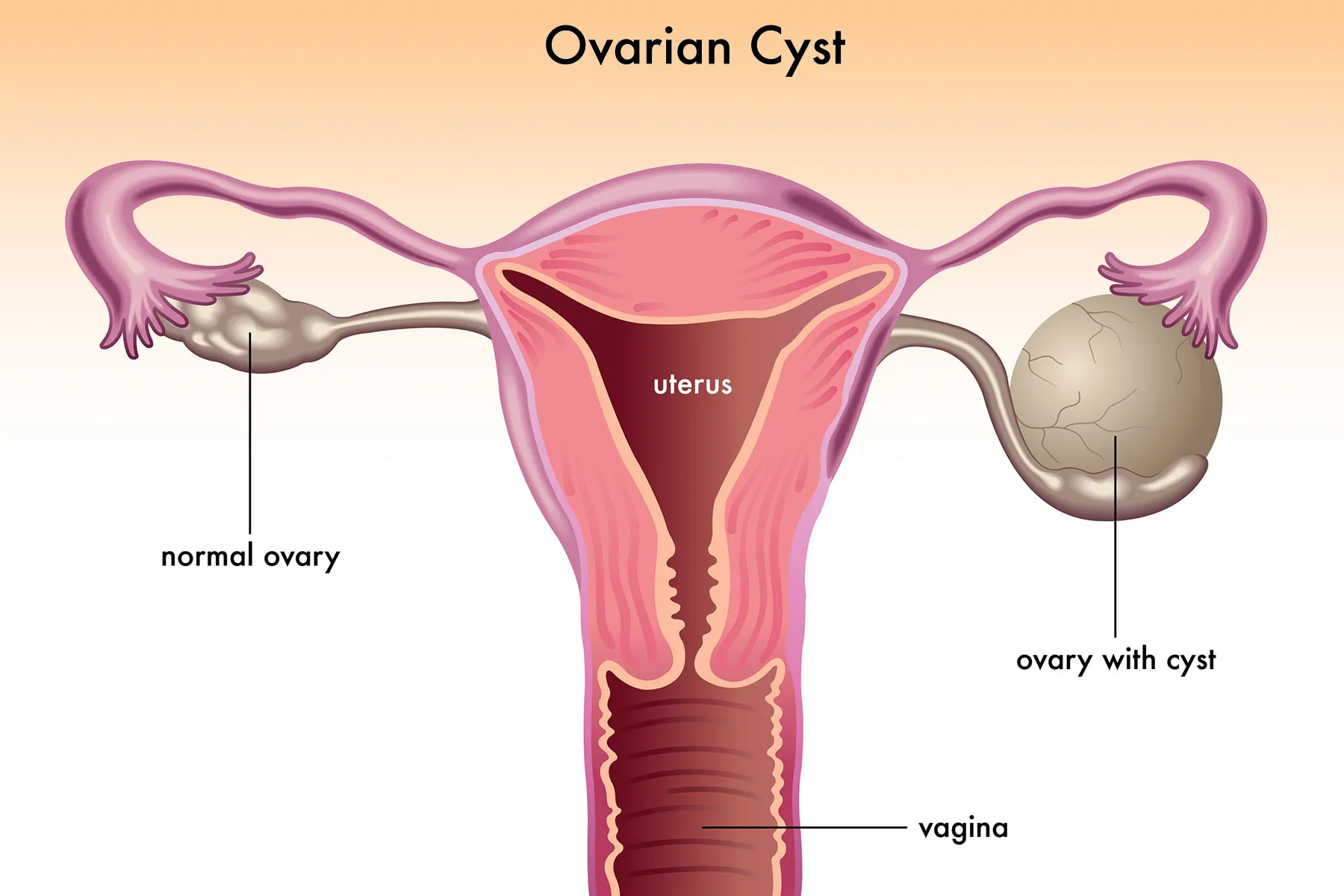
Ovarian cysts are fluid-filled or semi-solid pockets in or on one of your ovaries. They’re common, especially when you're pregnant or haven’t gone through menopause yet. Most of the time, they don't hurt or cause any problems. You might get one every month as part of your menstrual cycle and never know it.
Anyone who has ovaries can get an ovarian cyst. They usually go away on their own without treatment. A cyst can be a problem when it doesn’t go away, gets bigger, causes bleeding, or starts to hurt. There’s also a chance that an ovarian cyst is cancer, but that’s rare.
Types of Ovarian Cysts
Most cysts are “functional.” They’re a result of your normal menstrual cycle. These most often go away on their own within 2 to 3 months. Types of functional cysts include:
- Follicle cyst. Your ovaries usually release one egg with each cycle. It grows inside a tiny sac called a follicle. When the egg is ready, the follicle breaks open and releases it during ovulation. If the sac doesn’t open and keeps growing, it causes a follicle cyst.
- Corpus luteum cyst. After an egg is released, the empty follicle usually shrinks. The follicle also starts making hormones. At this point, the follicle is called the corpus luteum. If the opening where the egg got released is blocked, fluid can collect inside to make a cyst.
Other ovarian cysts aren't functional. That means they don't form as a part of your menstrual cycle. These cysts don't always mean you have a disease you need to worry about. But your doctor might watch them to make sure they don't cause you any problems. These cysts include:
- Dermoid cyst. These cysts form from cells that make eggs. They start when tissues from your hair, skin, or teeth collect inside your ovary. Also called a teratoma, these cysts are almost never cancer.
- Cystadenoma. The cells that cover your ovary can form this type of cyst. It usually contains watery fluid or mucus and can grow larger than other types of ovarian cysts.
- Endometrioma. Sometimes called chocolate cysts, these complex ovarian cysts are filled with dark brown fluid. They can happen when you have endometriosis. This is a condition in which tissue similar to the lining of your uterus grows outside of it, including in your ovaries.
- Ovarian cancer. Rarely, an ovarian cyst may be caused by cancer. Unlike other types of ovarian cysts, these are solid masses.
You can also get a condition called polycystic ovary syndrome (PCOS), in which your ovaries make many small cysts with immature eggs in them. When you have PCOS, you may not have monthly periods and your ovaries may not release eggs regularly.
Ovarian Cyst Symptoms
Most ovarian cysts are small and don’t cause any problems. Cysts more often cause trouble when they get bigger.
So what does an ovarian cyst feel like? Most of the time, they don't feel like anything at all. If you do have symptoms, signs of an ovarian cyst might include::
- Pelvic pain or pressure
- Dull ache in your back
- Bloating or feeling full
- Nausea
- Swelling in your belly area
- Pain during sex
- Pain during your period
- A frequent urge to pee or poop
The ovarian cyst pain location may be on one side of your lower belly or in your back. Ovarian cyst pain may be sharp or dull, and it can come and go. Most cysts go away on their own, but you may need to see a doctor if your cyst grows large, causes symptoms, or bursts.
Symptoms of a burst ovarian cyst
A cyst can break open, or rupture. You'll probably feel some pain when this happens, but you might not. You may notice some discomfort a few days after your cyst bursts, too. Sometimes, when ovarian cysts rupture, you'll have discharge that looks like vaginal spotting or bleeding.
Symptoms of a burst ovarian cyst may include:
- Sharp, sudden pain in your lower belly or back
- Bloating that doesn’t go away
- Abnormal spotting or bleeding
Sometimes when an ovarian cyst bursts, it's an emergency. Get medical help right away if you have:
- Sudden, serious belly pain
- Pain with fever and throwing up
- Dizziness, weakness, or feeling faint
- Fast breathing
Call 911 or go to the hospital if you have symptoms of internal bleeding from a burst ovarian cyst, including belly pain that gets worse or signs you've lost a lot of blood like dizziness or weakness. You may need surgery to control the bleeding.
Difference between ovarian cysts and ovarian cancer
Less than 1% of ovarian cysts are caused by cancer. Your odds are slightly higher if you’ve gone through menopause. But no matter your age or whether you can get pregnant, it can be hard to tell the difference between ovarian cysts and ovarian cancer from your symptoms alone.
Ovarian cancer and cysts both can cause symptoms like:
Bloating and pressure in your belly
Urges to pee often
Pain in your lower belly or pelvis
Pain in your lower back
Fatigue
Changes in how often you poop, including constipation
Losing weight for no known reason
But with ovarian cysts, hair on your body and face sometimes grows in unusual ways. Ovarian cancer doesn't usually cause this symptom. Your doctor can take a closer look at your ovarian cyst with an ultrasound or other type of imaging. They may also order other tests. If they think you might have cancer, they may refer you to a specialist to learn more.
Ovarian Cyst Causes
The most likely cause of your cyst depends on several things, including whether you still have a regular menstrual cycle.
If you still get your period, some common causes of ovarian cysts include:
- Ovulation. Most functional cysts happen when the follicle grows like it should but doesn’t break open to release the egg.
- Endometriosis. People who have endometriosis, especially advanced stages of the disease, can develop endometrioma cysts.
- Pelvic inflammatory disease (PID). You may get pus-filled cysts on or close to your ovaries if you have a pelvic infection.
- Abnormal cell growth. You may get dermoid or cystadenoma cysts if cells in your ovaries grow in an abnormal way.
Other causes of ovarian cysts when you still have menstrual cycles include:
- Polycystic ovarian syndrome (PCOS)
- Pregnancy
- Noncancerous growths
- Cancer
If you’ve gone through menopause, your ovarian cysts may be from:
- Noncancerous growths
- Fluid in the ovary
- Cancer
Ovarian Cyst Risk Factors
Things that may make you more likely to get ovarian cysts include:
- Age. You're most likely to get ovarian cysts when you have a menstrual cycle. Cysts are less common in those too young to have periods and after menopause.
- Hormonal problems. You're more likely to get ovarian cysts if you have a medical condition that affects your hormones, such as polycystic ovary syndrome (PCOS).
- Taking fertility drugs. For instance, using clomiphene (Clomid) to help you ovulate can increase your risk of cysts.
- Pregnancy. A cyst that forms during ovulation may stay on your ovary after you get pregnant and throughout your pregnancy.
- Endometriosis. Anyone with endometriosis can get ovarian cysts, but it's more likely if you have a serious case.
- A serious pelvic infection. If this spreads to your ovaries, it can cause cysts there.
- A previous ovarian cyst. If you’ve had an ovarian cyst before, you’re more likely to get others.
Are Ovarian Cysts Dangerous?
Usually the answer is no. But some people have ovarian cyst complications. Your ovarian cyst is more likely to lead to complications or need surgery if it gets bigger than 5 to 10 centimeters (from about the size of a lime to that of a grapefruit).
- Ovarian torsion. If cysts grow large, they can make the ovary move and twist. This twisting, called ovarian torsion, is very painful. It also can make you feel nauseous or throw up.
- Rupture. Cysts can break open, causing serious pain and bleeding, especially if they're large. Sex and other vigorous activities can make a rupture more likely. A ruptured cyst sometimes heals on its own, but it can be a medical emergency.
- Infected ovarian cyst. An ovarian cyst can develop from a pelvic infection, forming an abscess. If the abscess bursts, dangerous bacteria can spread through your body. This could lead to sepsis, which is a life-threatening condition.
Ovarian Cyst Diagnosis
Sometimes, your doctor finds a cyst during a pelvic exam. They’ll ask questions about your pain and other symptoms.
A cyst can be fluid-filled, solid, or mixed. To diagnose what kind you have, your doctor may recommend one or more of these tests:
- Pregnancy test. A positive pregnancy test may mean you have a corpus luteum cyst.
- Pelvic ultrasound. This uses sound waves to make an image of your uterus and ovaries. Your doctor can confirm that you have a cyst, pinpoint its location, and figure out what kind it is.
- Laparoscopy. Your doctor inserts a slim instrument with a light and a camera into your belly through a small cut. They can see your ovaries and remove any ovarian cysts.
- Blood test. If you have a partially solid ovarian cyst, your doctor may want to test your blood for levels of a protein called CA 125 (cancer antigen 125). It’s often higher in women who have ovarian cancer and in those who have conditions such as uterine fibroids, endometriosis, and pelvic inflammatory disease (PID).
Ovarian Cyst Treatment
Most cysts go away on their own. Your doctor may suggest:
- Watching and waiting. Your doctor will monitor you over time to see if your cyst goes away or changes.
- Medicine. There isn't any specific ovarian cyst medication. But your doctor can give you medicine if you're in pain. They might also prescribe birth control pills or other hormonal treatment. Hormone treatments won’t make the cysts go away, but they can help prevent new ones.
- Surgery. Some ovarian cysts need surgery. That includes those that are large, don’t go away, or cause serious symptoms. You could also need surgery if you’re near or past menopause because your cysts are more likely to be cancerous. Your surgeon may decide to take just the cyst or the entire ovary.
Surgeons use two types of surgery to remove ovarian cysts:
- Laparoscopy. You're most likely to have this type of surgery to remove ovarian cysts. The doctor makes tiny cuts above or below your belly button. A small tool with a camera allows your doctor to see inside, and a different tool removes the cyst. You can probably go home the same day.
- Laparotomy. Your surgeon will make one bigger cut in your belly, so they can get to your ovary and cyst better. You're more likely to need this kind of surgery if you have a large cyst or doctors think it may be cancerous.
Takeaways
Many people with ovaries get fluid-filled cysts that come and go. Usually it's nothing to worry about, but tell your doctor if you have new symptoms of pelvic pain, bloating, heavy bleeding, or bleeding outside of your period. You may need surgery or other medical treatment for ovarian cysts that get bigger, cause symptoms, or don’t go away on their own. Get help right away if you have sudden, serious belly pain along with nausea, throwing up, fever, dizziness, or other signs of a burst ovarian cyst.
Ovarian Cyst FAQs
What are the first symptoms of an ovarian cyst?
You may not feel anything, but people often get a sharp pain or feel pressure on one side of the body.
How serious is a cyst on your ovaries?
Ovarian cysts usually don’t cause big problems. But tell your doctor if you think you have one. Sometimes, they can grow large and cause pain or burst open. And some ovarian cysts make it harder to get pregnant. Rarely, ovarian cysts are cancerous.
What are the serious symptoms of an ovarian cyst?
You may feel sick to your stomach or throw up if a cyst moves your ovary out of place (ovarian torsion) or breaks open. An ovarian cyst that bursts may cause sudden, serious, one-sided belly or back pain. You may feel lightheaded or weak if a ruptured ovarian cyst causes internal bleeding.
How worried should I be about an ovarian cyst?
Ovarian cysts are common in people who have monthly periods. Most go away on their own and don’t pose a serious health risk. But tell your doctor about any new or ongoing symptoms of ovarian cysts, especially if you have constant bloating, lose weight without trying, or get sudden belly pain that gets worse or makes you feel sick, dizzy, or weak.